


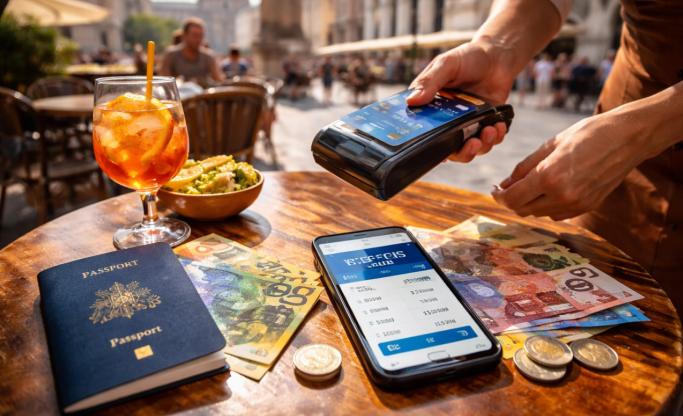
Australians are known to be avid travellers who enjoy exploring the world. However, it’s not just a simple case of booking a flight and a hotel. Foreign exchange fees can quickly erode your well-earned vacation money.
One way to protect your budget is to learn more about your bank’s exchange rate margin. This article will teach you all about exchange rate margins, compare different payment options, and reveal to you the secret to avoiding terminal fees.
The Truth About Exchange Rate Margins
Do you remember the last time you used your card to pay in another country? Did you get the exact rate that’s displayed on news websites? Of course not! The rate that’s displayed on news websites is called the mid-market rate. Banks charge a margin on top of that rate. And to top it all off, they charge a foreign transaction fee on top of that rate.
This fee is around three percent of the total amount of your purchase. Yes, it’s a small amount of money, but it can quickly accumulate to a large amount over a two-week vacation. Being aware of these fees is the first step towards enjoying your vacation instead of your bank account.
Travel Cards vs. International Debit Cards
You have a few options when it comes to carrying your money when you are travelling overseas. You could use prepaid travel cards. Using prepaid cards allows you to fix the exchange rate before you go. This is useful when you are travelling because the exchange rate may fluctuate when you are away. However, you have to pay load fees, ATM fees, and even inactivity fees when you use prepaid cards.
The alternative is the new international debit card from ING and other providers. These cards are very useful for international travellers. Digital banks and challenger brands are now offering debit cards designed for international use. These debit cards offer the advantage of zero international transaction fees.
They also offer the exact exchange rate charged by Mastercard or Visa without charging you the bank’s margin. Using a debit card for international travel gives you the ultimate freedom while keeping your exchange rate costs very low.
Dodging Dynamic Currency Conversion at the Till
One of the biggest pitfalls facing Australian international travellers is the Dynamic Currency Conversion option at the payment terminal. You are at a restaurant overseas, you insert your card into the payment terminal, and you are given the option of paying in Australian dollars or the local currency. It is called Dynamic Currency Conversion.
Always choose the local currency. If you choose to pay in Australian dollars, the foreign restaurant gets to choose the exchange rate. They are going to charge you a huge markup. Therefore, you are going to pay a lot of money for your meal. It is better to avoid the Dynamic Currency Conversion option.
Protect Your Travel Budget
You do not have to worry about your money when you are travelling overseas. However, you have to be aware of the banking margin. Using an international debit card without international fees is the key to stretching your travel budget. Take the time to review your banking situation before your next trip!